
Sambrow Journal · Markham
Powder Brows vs Microblading: Which Is Right for You?
Technique, skin-type fit, longevity, healing and 2-year cost — the decision framework Sam Liang uses with every Sambrow brow client
TL;DR
Powder brows (also called Ombré or Shadow Brows) and microblading are the two most popular semi-permanent brow techniques — but they are not interchangeable. Microblading uses a hand tool with a tiny blade to deposit pigment in hair-like strokes, producing a soft, natural, hair-stroke brow that suits normal-to-dry skin. Powder brows use a digital machine and a pixel-shading technique to build a soft, powdered, makeup-like brow that suits oily, mature, sensitive or scar-tissue skin and lasts longer. The most common mistake in Markham and the wider GTA is choosing the technique based on aesthetic preference alone — the more important question is whether your skin type can hold the result. This guide breaks down the difference, the 8 factors that actually decide which is right for you, who suits each technique, how Sambrow runs a 5-step consultation to make the call, healing and aftercare differences, total 2-year cost, and the FAQs we hear most often. Every Sambrow appointment is bilingual (English and Mandarin Chinese) at our Markham, Ontario studio.
Want to see these techniques at Sambrow? Compare Shadow Brows and 3D Hyper-Realistic Brows — including pricing and healed results.
What Are Powder Brows and Microblading?
Microblading is a manual semi-permanent technique. The artist uses a fine handheld tool with a row of micro-needles to draw tiny incision-like strokes in the skin, depositing pigment one hair at a time. The finished effect mimics natural eyebrow hairs and is closest to a 'no-tattoo' result — when it heals correctly, people genuinely cannot tell the brows are tattooed.
Powder brows — also marketed as Ombré Brows or, at Sambrow, Shadow Brows — use a digital machine and a pixel-point or shading technique to deposit pigment in soft, overlapping dots rather than strokes. The finished effect is a powdered, softly graduated brow that looks like a light brow makeup applied to the skin: lighter at the front, gradually more saturated toward the tail. It is the more forgiving technique for the majority of skin types and the most photogenic under bright light.
Why Skin Type — Not Aesthetic — Should Lead the Decision
The single biggest predictor of how a brow technique heals is your skin type. Microblading deposits pigment in tiny linear incisions in the upper dermis. On oily skin, the body produces enough sebum to blur those crisp incision lines as they heal — within months a 'hair-stroke' brow on an oily client can blur into a soft, slightly muddy patch. On scarred or mature skin, the incision lines also fail to hold cleanly because the dermal structure is less elastic.
Powder brows do not depend on a clean incision line. The pixel-point shading sits more reliably in oily, sensitive, mature or post-cosmetic skin because the technique is built from many overlapping dots rather than discrete strokes. That is why most certified PMU artists, including Sam, will recommend powder/Shadow Brows for oily, combination-oily or mature clients — even when the client originally walked in asking for microblading.
8 Factors That Actually Decide Which Brow Is Right for You
Forget the marketing photos for a moment. These are the eight variables that determine which technique your skin can actually hold:
- 1
Skin Type
Oily and combination-oily skin almost always retain powder brows better than microblading. Normal-to-dry, intact skin can hold either — and microblading shows its hair-like detail best on this skin type.
- 2
Age & Skin Texture
Mature skin (typically over 45) has reduced collagen density and less elasticity. Powder brows hold more reliably; microblading risks blurred strokes within the first 6 months.
- 3
Aesthetic Preference
Microblading reads as the closest thing to natural hair. Powder brows read as 'soft makeup that never washes off.' Both are beautiful — the question is which look fits your daily face.
- 4
Longevity
Powder brows typically last 18–36 months. Microblading typically lasts 12–18 months. If you want fewer touch-ups, powder brows are the longer-lived investment.
- 5
Healing Time & Scabbing
Both techniques follow a similar 7–10 day healing window with scabbing. Powder brow scabs tend to be thinner and more uniform; microblading scabs follow each stroke and can be more visible during week 2.
- 6
Photo Finish
Powder brows photograph more reliably under bright light because the soft gradient mimics professionally applied brow makeup. Microblading reads beautifully in natural daylight but can look slightly less defined on bright stage or wedding-flash photography.
- 7
Suitability for Brow Gaps
Microblading is excellent for filling small specific gaps in otherwise healthy brows. Powder brows are better for reshaping, lifting, or rebuilding sparse-to-bare brows from scratch.
- 8
Two-Year Total Cost
Most clients in our market budget similarly for both over two years, because microblading's lower per-session cost is offset by needing one extra refresh inside the same window. Powder brows offer slightly fewer salon visits across the same period.
Who Each Technique Suits Best
Based on six skin-and-lifestyle profiles we see most often in Markham and the GTA:
Normal-to-Dry, Intact Skin
The classic microblading candidate. Hair-stroke detail holds cleanly and looks closest to natural brow hair.
Oily or Combination-Oily Skin
Powder/Shadow Brows. Pigment retention is significantly better than microblading on this skin type.
Mature Skin (45+)
Powder brows. Softer pixel shading is more forgiving on skin with reduced elasticity and finer crepiness.
Sensitive or Reactive Skin
Powder brows, performed with a slow shading pass. The technique avoids the deeper linear trauma of repeated microblading incisions.
Sparse or Over-Plucked Brows
Powder brows are usually the right call — they let the artist build shape and density from minimal existing hair, which microblading struggles to do convincingly.
Active or Sport-Heavy Lifestyle
Powder brows. Frequent sweating, gym sessions and outdoor sun all accelerate microblading fade more than they affect powder brows.
Sambrow's 5-Step Brow Decision Process
This is exactly how Sam runs a brow consultation. There is no commitment until step 5, and many clients change their minds between step 1 and step 4 — which is why we never book the procedure on the consultation day.
- 1
Skin & Lifestyle Reading
Sam evaluates your skin type under magnification, asks about sun exposure, daily makeup habits, hormonal cycle and any prior brow work. This stage filters out roughly half of incoming microblading requests in favour of powder brows.
- 2
Existing Brow Mapping
Your natural brow shape, hair density, asymmetry and the way you currently fill them in are mapped on the face. This determines whether the goal is enhancement, reshaping or full rebuild.
- 3
Technique Recommendation & Photo Reference
Sam presents the recommended technique with photo references of similar skin types and brow shapes — both freshly healed and 6 months later. You see the realistic outcome, not the social-media version.
- 4
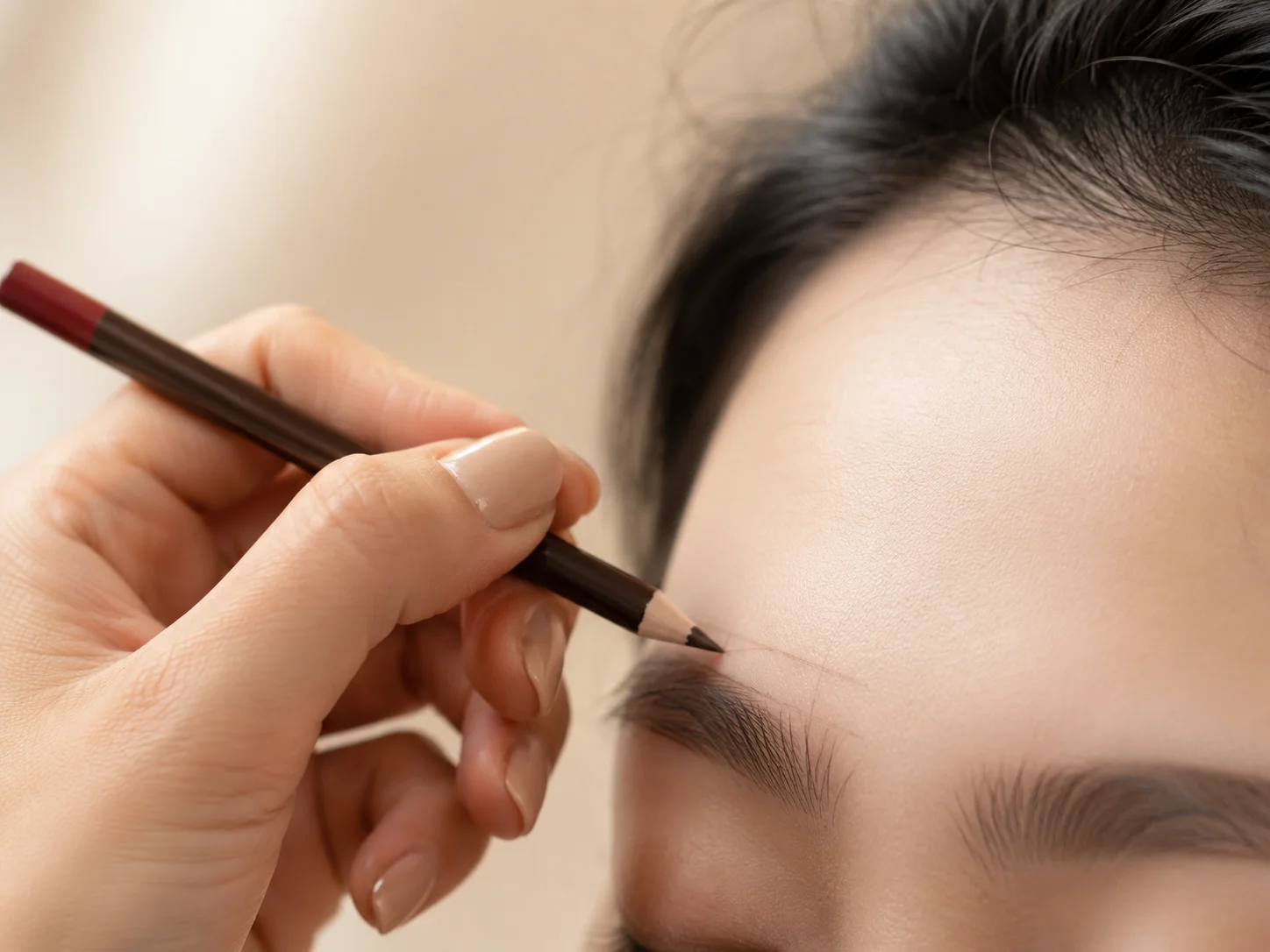
Trial Brow Pencil Mockup
Before any tattooing, the recommended shape is drawn on with brow pencil so you can see and live with the proposed shape for a few hours before deciding.
- 5
Booking & Pre-Care Plan
Once you confirm, we book the procedure for a later date and send a written pre-care plan: stop retinol on the brow area, avoid caffeine and alcohol the day of, no brow waxing or tinting for two weeks before the session.
Aftercare & Maintenance — How They Differ
The first-week aftercare is almost identical, but the long-term cadence is different. Plan for:
- ✦Both techniques: keep the area dry for the first 7 days, no makeup on the brows, no swimming, no sun, no acids
- ✦Both techniques: a mandatory touch-up at 6–8 weeks to lock in the final colour
- ✦Microblading: expect a refresh every 12–18 months to maintain crisp hair-stroke definition
- ✦Powder brows: expect a refresh every 18–36 months — longer-lived than microblading in the same client
- ✦Both techniques: daily SPF on the brow area is the single biggest factor in long-term retention
Why Brow Prep Starts With Skin & Lymph
The cleanest, most even-healing brows we see at Sambrow are rarely the ones from a single isolated brow appointment. They are the ones where the client also prepared the skin — calm barrier, low inflammation, no active breakouts on the forehead, and good lymphatic drainage around the temples and forehead.
We routinely recommend a lymphatic drainage session in the 1–2 weeks before a brow procedure, especially for clients with mild rosacea or a tendency toward forehead puffiness. The pigment uptake is more even and the healing is calmer. Explore Lymphatic Drainage at Sambrow →
" Microblading is a technique, not a wish. If your skin can't hold the strokes, the wrong technique on the right brows still ages badly. "
Why Sambrow for Brow Work in Markham
Brow work is the most personal corner of semi-permanent makeup — your brows frame your face every day for the next 1–3 years. Choosing the right technique, on the right skin, at the right shape, is the difference between a brow you love for two years and a brow you regret in six months.
At Sambrow, every brow client receives a full skin-type and shape consultation before any pigment touches the skin. We offer both 3D Hyper-Realistic Brows (microblading-derived) and Shadow Brows (powder/Ombré). The recommendation is always made on what suits the client, not what we want to sell. Explore Sambrow Semi-Permanent Brow Services →
Frequently Asked Questions (FAQ)
I have oily skin but really want the microblading look — is it possible?+
Possible, but usually not advisable. On oily skin, hair-stroke definition typically blurs within 4–8 months. A common compromise is a 'combo brow' — soft powder base with a few microbladed hair strokes at the front. Sam will discuss whether this hybrid suits your skin during the consultation.
Will it hurt?+
Both techniques use topical numbing. Most clients describe the sensation as mild scratching for microblading and a soft vibrating sensation for powder brows. Powder brows are generally the more comfortable of the two.
Can I switch from one technique to the other later?+
Yes — most commonly, clients who originally had microblading transition to powder/Shadow Brows as the original work fades and they decide they want more longevity. Sam can plan this transition without colour correction in most cases.
How visible are the brows during week 2?+
Week 2 is the awkward 'fade and flake' phase for both techniques. The pigment looks 30–50% lighter than the final result and you may see some flaking. By week 4 the colour returns and by week 6–8 (after the touch-up) you see the final result. Plan accordingly around events.
Can I get either technique if I've had previous brow tattoos?+
Sometimes — it depends entirely on the colour, depth and age of the existing work. Some old brow tattoos can be covered with new powder work; others require laser or saline removal first. Bring photos to your consultation and Sam will give you an honest assessment.
Is microblading safe during pregnancy or breastfeeding?+
We do not perform either technique during pregnancy. Breastfeeding clients are evaluated case-by-case with their healthcare provider; we typically recommend waiting until breastfeeding is complete.
How long is the appointment?+
Plan for a 2.5-hour appointment for the initial session — consultation, mapping, numbing, the procedure and aftercare instructions. The 6–8 week touch-up is shorter, typically 90 minutes.
Not Sure Which Brow Technique Is Right for You?
Whether you want a soft, natural hair-stroke look or a polished, photo-ready powder brow, Sambrow Markham offers a one-on-one brow consultation that puts your skin type first and the trend second. We'll show you photo references of similar clients at fresh and 6-month healed, so you decide with full information.